Source weatherproof electrical isolators for exposed HVAC units in Australia through Aircoplus. Check specifications and available options online today.
What Are Weatherproof Electrical Isolators?
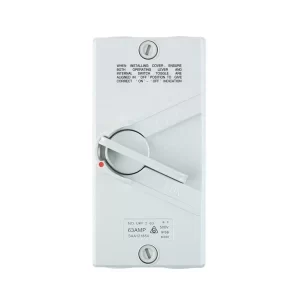
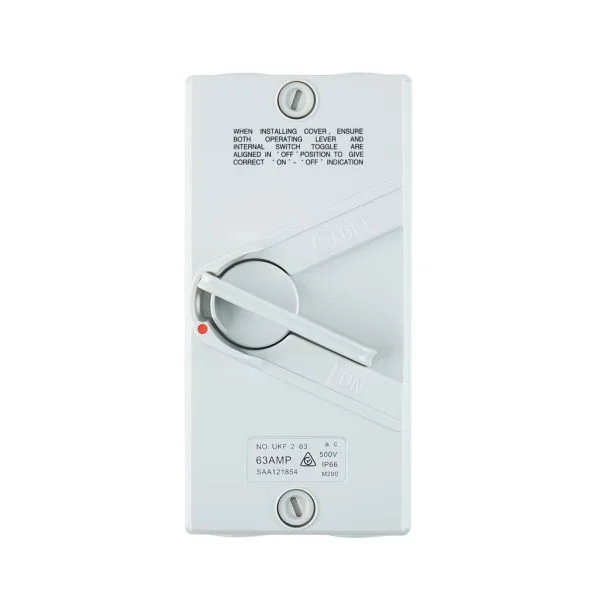
An electrical isolator is a manually operated switch that disconnects equipment from its electrical supply for servicing or maintenance. A weatherproof model houses the switch in an enclosure rated to resist specified levels of dust and water ingress. For outdoor HVAC units exposed to rain, dust, sunlight and temperature changes, the isolator provides a clear local disconnection point, but its rating and installation must suit the circuit, equipment and site conditions.
Why Does Outdoor HVAC Equipment Need Local Isolation?
Condensers and other external HVAC units need an accessible means of isolation for electrical work. The switch must also remain identifiable and practical to operate after refrigerant pipework, drainage and mounting hardware are installed.
Exposure varies between wall-mounted, ground-level and rooftop equipment. Coastal air, direct sprinkler spray, roof run-off and airborne debris may also affect product and placement decisions.
Contractors should review:
- Rain direction: Wind-driven rain may reach equipment beneath shallow eaves or in open plant areas.
- Dust exposure: Loading areas and construction zones may subject enclosures to fine particles.
- Physical access: Pipework, fences or vegetation should not obstruct the handle or enclosure cover.
- Impact risk: Trolleys, tools and maintenance activity can damage a poorly positioned switch.
- Cable entry: Glands, conduit and seals must retain the enclosure’s intended protection.
- Equipment data: Circuit requirements must be checked against the isolator’s electrical rating.
Selecting Weatherproof Electrical Isolators for HVAC Projects
The Aircoplus 35 A two-pole isolator is listed as IP66 weatherproof. Its published features include fixed neutral and earth bars, dual 25 mm screwed conduit entries at the top and bottom, and AC22A/AC23A utilisation categories.
The Aircoplus mini 20 A two-pole isolator is also listed as IP66. Its compact enclosure includes several 20 mm and 25 mm conduit-entry options.
These are two distinct ratings, not interchangeable choices. Circuit design and equipment specifications determine which model may be suitable. The appropriate rating depends on the circuit design and equipment specifications, with Aircoplus listing 20 A and 35 A two-pole isolators for different installation requirements.
How Can Installation Preserve the Enclosure Rating?
Unsuitable openings, missing seals or unsecured components can compromise an isolator’s ingress protection. Water pooling or flowing over cable entries adds risk. WorkSafe Victoria identifies outdoor exposure, heat, UV, moisture, vibration and dust as potentially hostile conditions and advises using appropriately licensed or registered electricians for repairs.
Placement should allow the handle to move freely and the label to remain visible. A suitable mounting surface or isolator stand may keep the switch secure, though the supporting structure and fixings still require site-specific assessment.
Source Suitable HVAC Isolators in Australia
Correct selection starts with the HVAC equipment data, circuit requirements and actual exposure at the installation point. Weatherproof electrical isolators can protect switching components from rated environmental exposure, but they do not correct poor siting or non-compliant electrical work.
Aircoplus lists electrical components alongside broader HVAC products and order-and-delivery services. Check the specifications and enquire now about current availability.